Teaching with Purpose: A Professional Development Experience Built by Teachers for Teachers

Teaching rests on a foundation of connection, but exhaustion and institutional pressures can keep teachers from doing what they love. Teachers are told to dance between mandated standards and the lived realities, questions, and interests of their students. What happens when teachers are given the flexibility and tools to be more than facilitators of curriculum and, instead, help students make sense of their worlds through stories, reflection, and guided creation?

This question sits at the heart of purpose learning, a foundational tenet of our partner, K12 Change Lab. Purpose learning is the idea that to build a future generation of deep thinkers, students need to learn through thinking, feeling, and doing. Their connection to the world guides their experience in it, allowing them to move through it with more direction and clarity. Storytelling plays a major role in this, transforming the why behind purpose into something tangible through identity reflection and narrative formation.
While teachers are often the primary guides along this journey, that responsibility can be overwhelming — especially when educators haven’t been given the tools or time to figure out how to lead in this way.
That challenge inspired EMA’s professional development (PD) program pilot, held on Friday, February 27th at Lincoln Sudbury Regional High School in Massachusetts. With films from EMA partner BYkids, filmmaking tools from EMA partner Filmbuilding, and a collaborative learning environment fostered by EMA’s Community of Learners, the program introduced 19 educators from six school districts to purpose storytelling — a creative framework for students to express their identity and connection to community through visual means. As noted by some of the PD participants:
Incorporating media created and produced "by kids" who were exploring the compelling subjects in their lives… feels like a transformative way to connect and engage students with the content of our units. There was so much active thinking and learning going on!
I have now watched three of the films, including the one we watched together on Friday, and I love the real-life connections my students will be able to draw with the people. I also think these serve beautifully as complementary texts to the novels I teach.

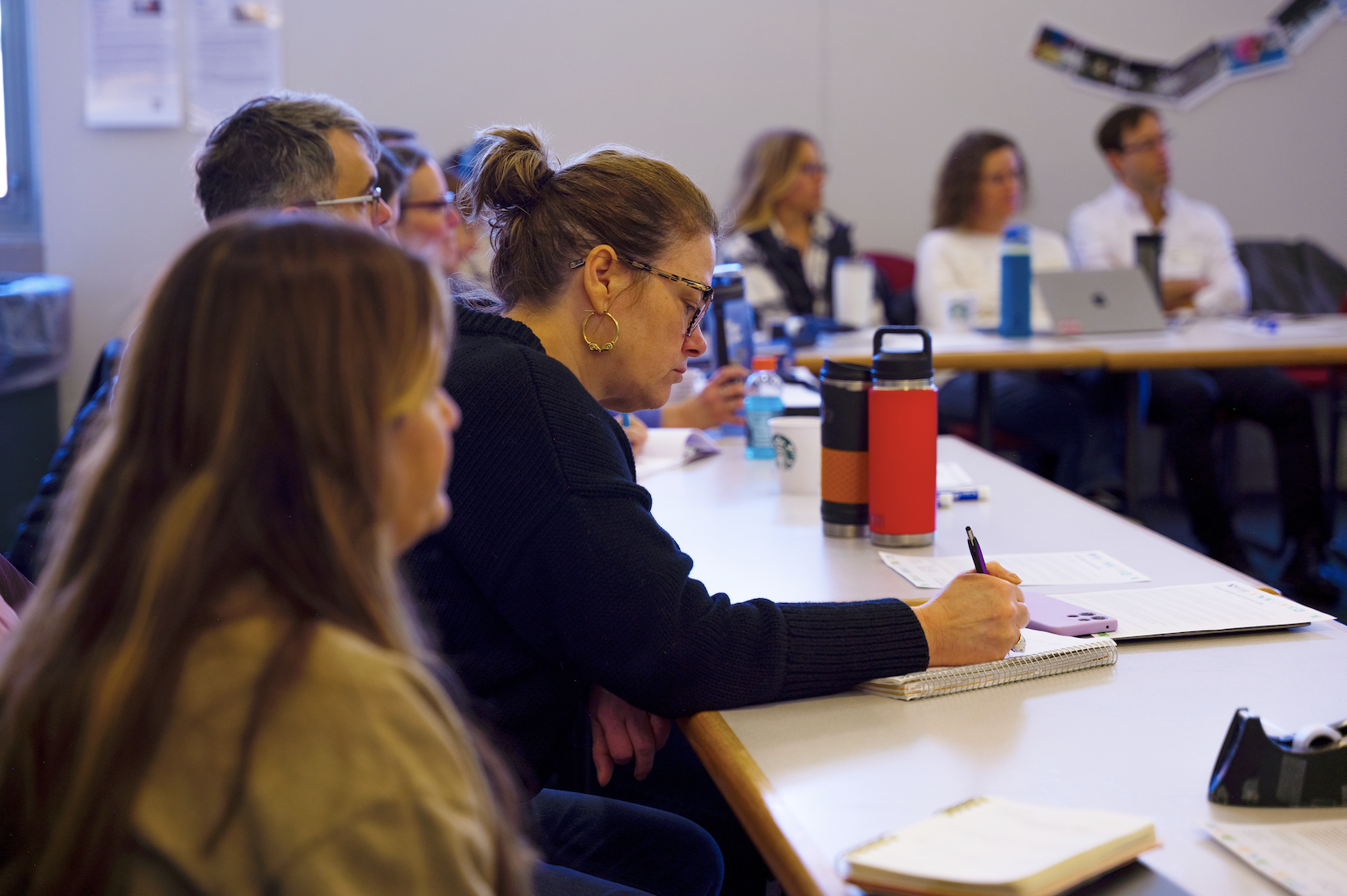
The entire PD event was built by teachers, for teachers. Participants were both the sharers and receivers, stepping into the role of learners for the day. Throughout the workshop, reflection and creation were at the foundation of every activity.
David Grace, EMA Director of Education and Lincoln Sudbury High School History teacher, introduces the goals for the PD workshop to the participating teachers.
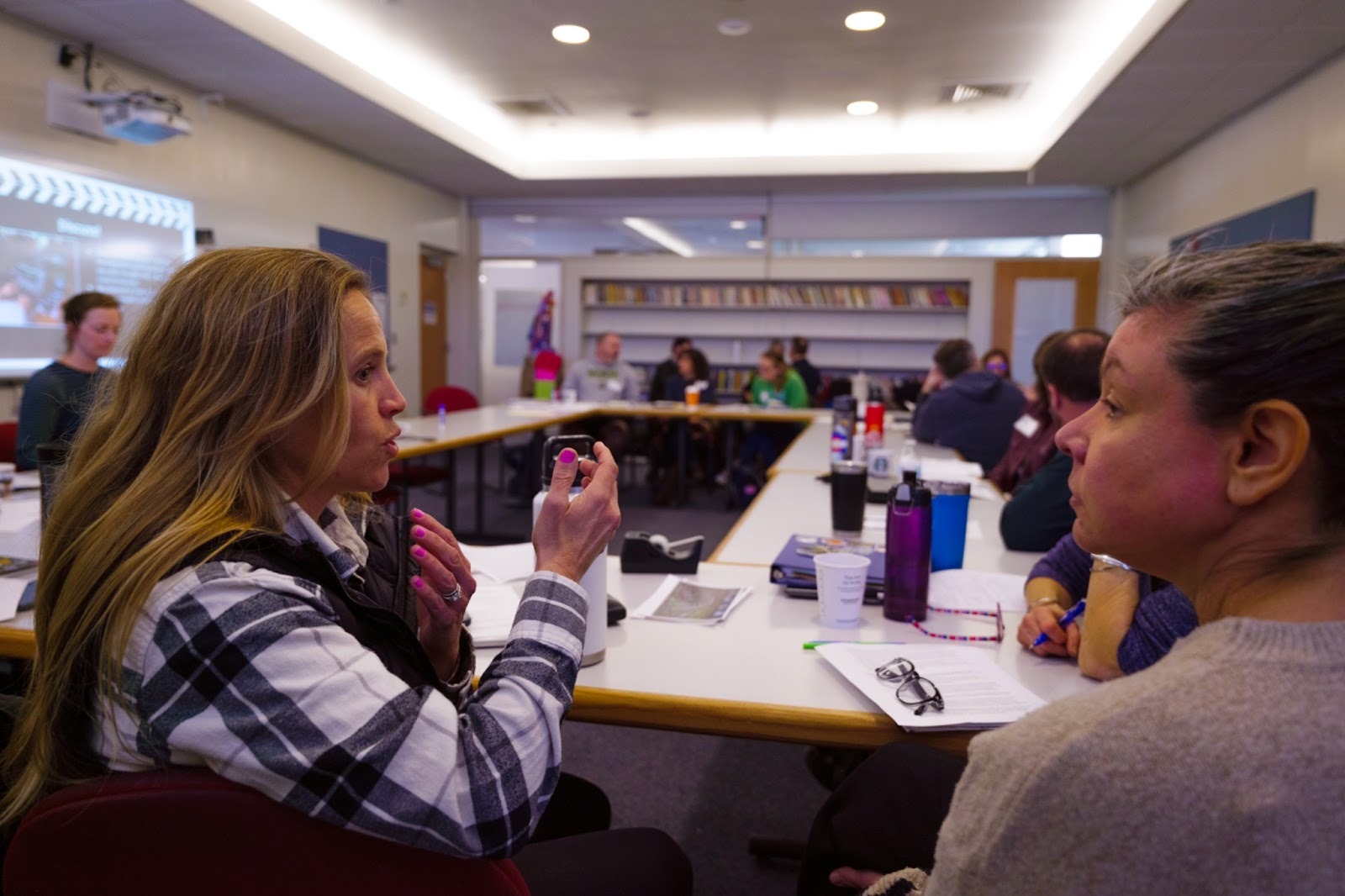
Chelsea Rafferty, an English teacher at Needham High School, shares her thoughts on how BYkids films and resources can help to counteract student apathy.

I am not one who usually feels like PD is worth it; it is often forced and I feel talked to rather than a place of discussion and collaboration. I needed my teacher-cup filled, and you provided that for me today.
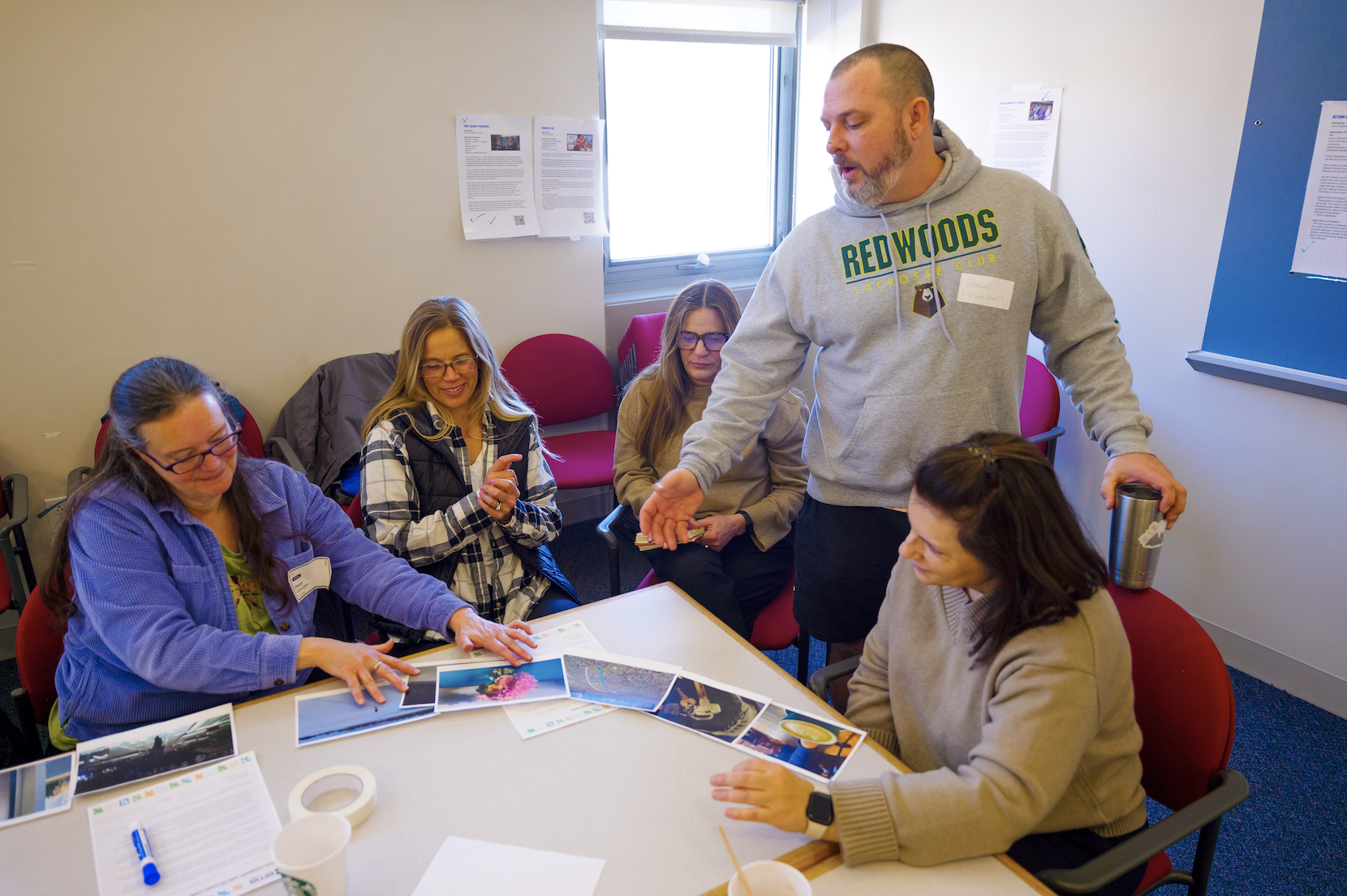
Teachers explored storytelling through exercises that broke the framework into accessible steps. Instead of just being lectured at about classroom strategies, participants practiced them. They shared personal stories, experimented with adaptable visual storytelling techniques, and dived into how identity and narrative intersects in meaningful ways. For the finishing touch, teachers left with classroom-ready materials to immediately adapt what they learned to guide students on their own purpose-driven, storytelling journeys.
The day went by very quickly for me, which means I was engaged and learning! It was a collaborative experience and I left with several new tools that I can put to use immediately.
As a special education teacher with a background in history, I have used videos and storytelling of many historical actors to help tell and explain an event in history. What I took from this experience is that my students can do the same—tell us what they know, what they learned, their experiences, or what their story is. That is powerful and just as important to academic success as any historical media I can find.
Purpose learning reminds us that education is more than just memorization and recitation. At its best, it is about developing direction, clarity, and a sense of belonging. At the professional development workshop, teachers experienced how that experience can operate both ways: When educators are given the space to reflect, create, and reconnect with their own purpose, they are better equipped to help students discover theirs.