Oops! Something went wrong while submitting the form.
In-Sight Collaborative offers monthly wellness sessions to the general public. These sessions are designed to provided a supportive space for those who are on the frontlines of change, come together, process the world and our work, and heal. These groups are designed to create a space where individuals involved in humanitarian efforts can connect, share experiences, and process the emotional toll of their work through creative and hands-on means. It’s a place to share the challenges we’re facing, reflect on our personal journeys, and heal together in a supportive, like-minded community.
In the midst of hustle and burnout culture, how can we create a revolutionary rest practice for ourselves and our communities? The sacred act of resting and resisting outside forces that want us to work to the point of exhaustion is a small act of defiance that can have massive ripple effects. Join us for an hour of learning about the seven types of rest and how to cultivate a culture of rest and regeneration in our lives and communities.
Teaching rests on a foundation of connection, but exhaustion and institutional pressures can keep teachers from doing what they love. Teachers are told to dance between mandated standards and the lived realities, questions, and interests of their students. What happens when teachers are given the flexibility and tools to be more than facilitators of curriculum and, instead, help students make sense of their worlds through stories, reflection, and guided creation?
This question sits at the heart of purpose learning, a foundational tenet of our partner, K12 Change Lab. Purpose learning is the idea that to build a future generation of deep thinkers, students need to learn through thinking, feeling, and doing. Their connection to the world guides their experience in it, allowing them to move through it with more direction and clarity. Storytelling plays a major role in this, transforming the why behind purpose into something tangible through identity reflection and narrative formation.
While teachers are often the primary guides along this journey, that responsibility can be overwhelming — especially when educators haven’t been given the tools or time to figure out how to lead in this way.
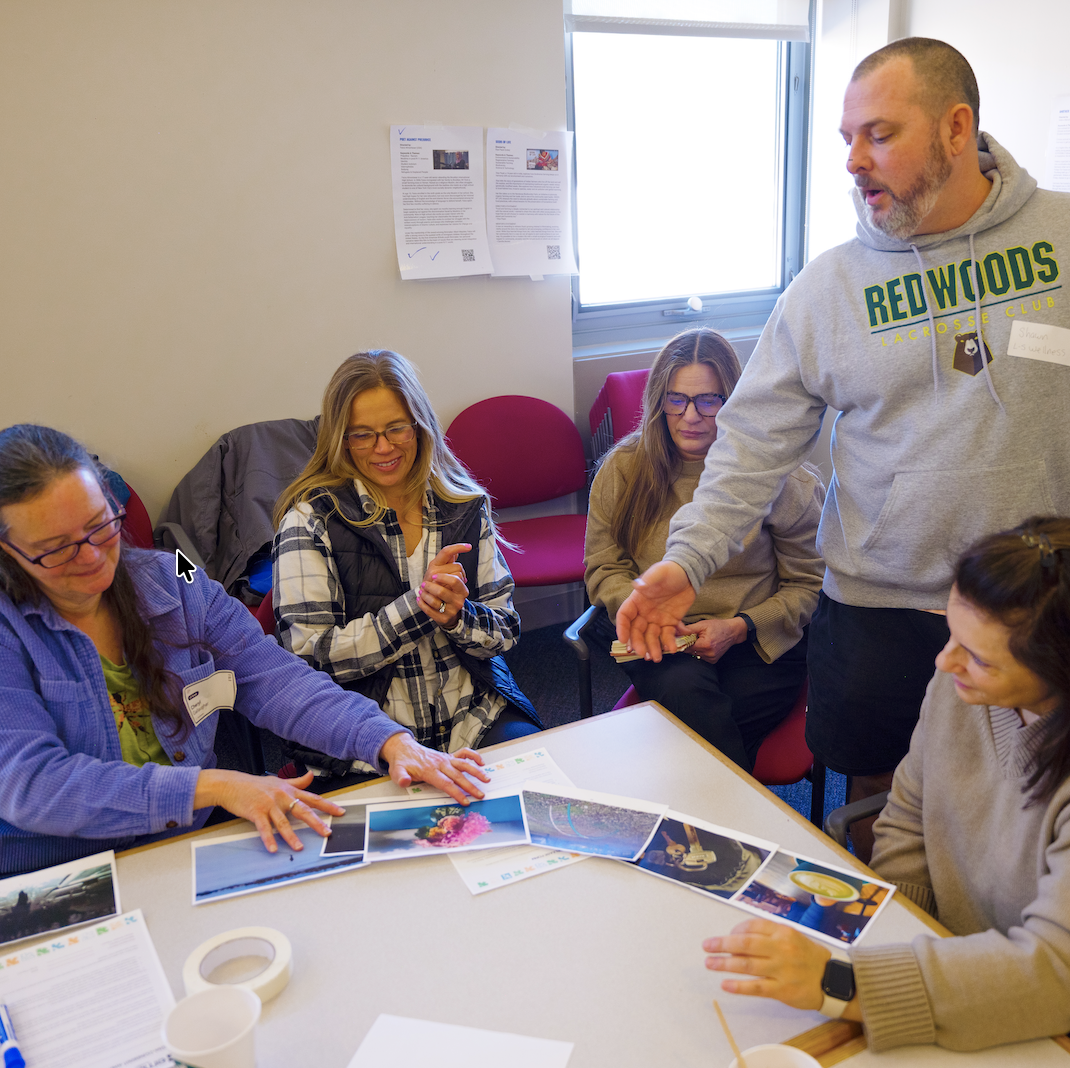
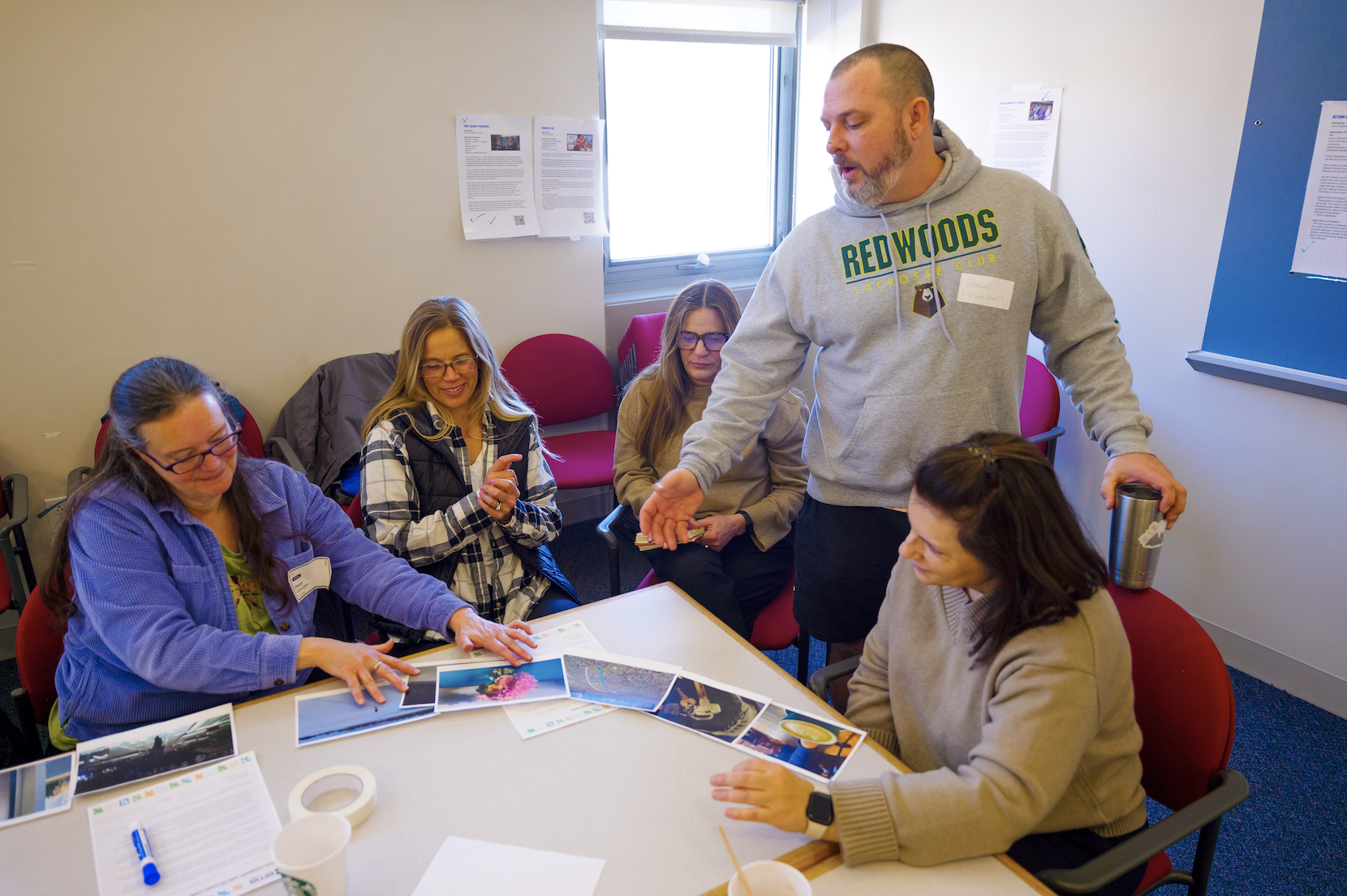
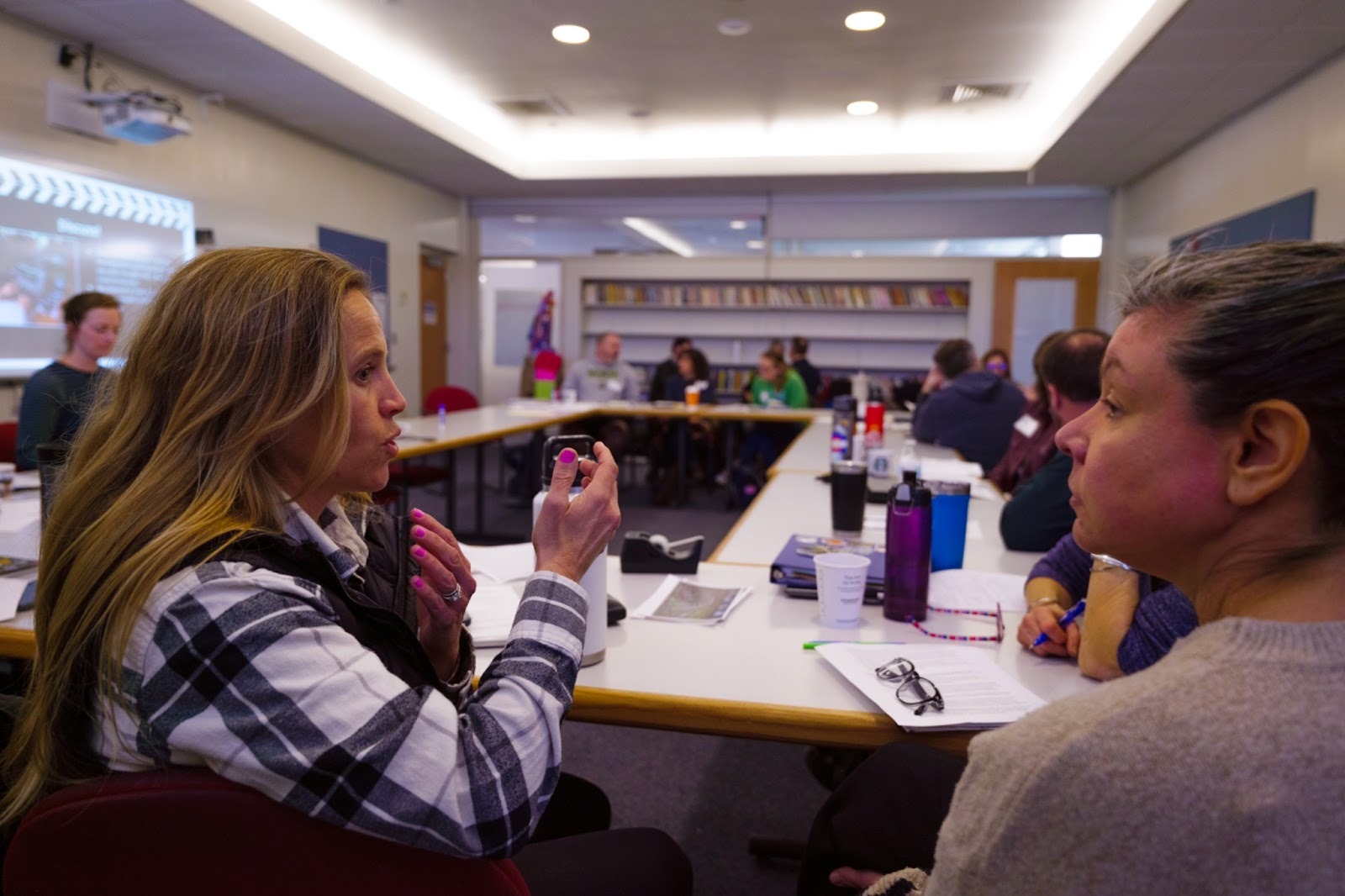
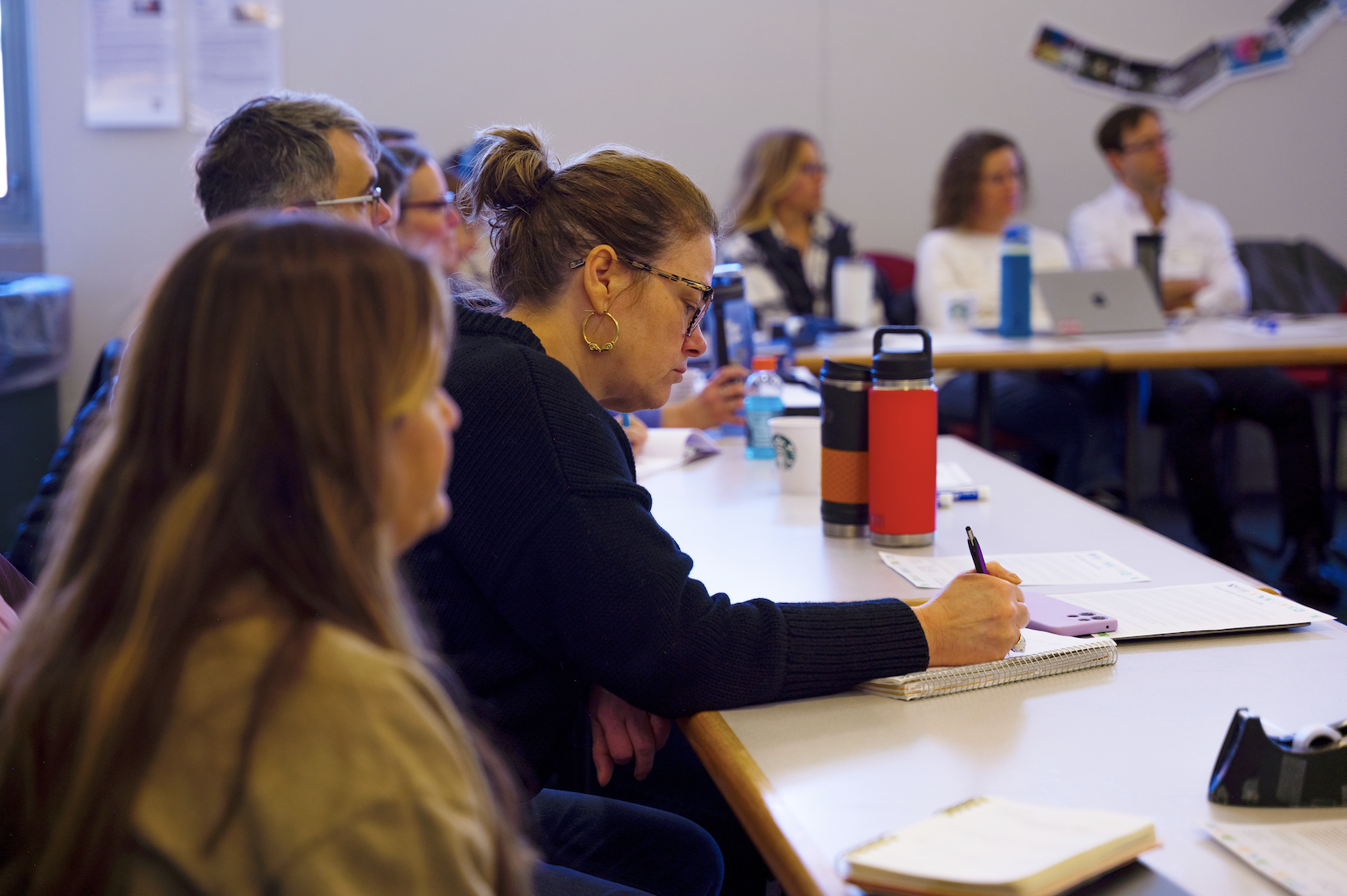
That challenge inspired EMA’s professional development (PD) program pilot, held on Friday, February 27th at Lincoln Sudbury Regional High School in Massachusetts. With films from EMA partner BYkids, filmmaking tools from EMA partner Filmbuilding, and a collaborative learning environment fostered by EMA’s Community of Learners, the program introduced 19 educators from six school districts to purpose storytelling — a creative framework for students to express their identity and connection to community through visual means. As noted by some of the PD participants:
Incorporating media created and produced "by kids" who were exploring the compelling subjects in their lives… feels like a transformative way to connect and engage students with the content of our units. There was so much active thinking and learning going on!
I have now watched three of the films, including the one we watched together on Friday, and I love the real-life connections my students will be able to draw with the people. I also think these serve beautifully as complementary texts to the novels I teach.
The entire PD event was built by teachers, for teachers. Participants were both the sharers and receivers, stepping into the role of learners for the day. Throughout the workshop, reflection and creation were at the foundation of every activity.
David Grace, EMA Director of Education and Lincoln Sudbury High School History teacher, introduces the goals for the PD workshop to the participating teachers.
Chelsea Rafferty, an English teacher at Needham High School, shares her thoughts on how BYkids films and resources can help to counteract student apathy.
I am not one who usually feels like PD is worth it; it is often forced and I feel talked to rather than a place of discussion and collaboration. I needed my teacher-cup filled, and you provided that for me today.
Teachers explored storytelling through exercises that broke the framework into accessible steps. Instead of just being lectured at about classroom strategies, participants practiced them. They shared personal stories, experimented with adaptable visual storytelling techniques, and dived into how identity and narrative intersects in meaningful ways. For the finishing touch, teachers left with classroom-ready materials to immediately adapt what they learned to guide students on their own purpose-driven, storytelling journeys.
The day went by very quickly for me, which means I was engaged and learning! It was a collaborative experience and I left with several new tools that I can put to use immediately.
As a special education teacher with a background in history, I have used videos and storytelling of many historical actors to help tell and explain an event in history. What I took from this experience is that my students can do the same—tell us what they know, what they learned, their experiences, or what their story is. That is powerful and just as important to academic success as any historical media I can find.
Purpose learning reminds us that education is more than just memorization and recitation. At its best, it is about developing direction, clarity, and a sense of belonging. At the professional development workshop, teachers experienced how that experience can operate both ways: When educators are given the space to reflect, create, and reconnect with their own purpose, they are better equipped to help students discover theirs.
One of the defining elements of EMA’s work with our partners is the capacity-building support provided by our young team members. What makes that work unique is how deeply steeped we are in who our partners are—not just as they are today but who they aspire to be. We see them, we hear them, we learn from them, and we co-create solutions with them that allow them to share their outstanding work with the public at large.
Early in 2025, Tom Flint, Founder and Executive Director of EMA partner Filmbuilding, came to us with an ask for our Communications team to help create a visual identity that communicated what Filmbuilding was and what it aimed to do:
As opportunities for Filmbuilding continue to grow, it is becoming more essential for the program to have a recognizable “brand” that helps connect with its base and tell its story. As the Filmbuilding program and mission has shifted over the past year to one that seeks to support communities by confronting challenges through discovery-based filmmaking experiences, the time has come to express this through its branding and marketing efforts in a more intentional and standardized way.
However, it is becoming clear that people don’t fully “get” what Filmbuilding is, so it may be time to create a new (or alternate) logo and define a set of branding guidelines for the program.”
Over a series of meetings, EMA’s Communications team sat with Tom to hear more about Filmbuilding’s origin story, the source of inspiration behind Filmbuilding’s original logo, and what Tom really wanted to express through a new visual identity.
With each meeting, my understanding of Tom’s passion for co-creative and collaborative filmmaking, intuitive storytelling, and human connection deepened. Through those conversations, I understood how the Filmbuilding process helped young people connect with and communicate their worlds. I recognized how vital it was for our team to present Tom with a visual identity that communicated that understanding.
Tom's previous work on Filmbuilding's branding was incredibly thoughtful, so the challenge really was taking the sophistication Tom has imbued into the organization's identity and adding clarity to give a more focused visual language. I'm really proud of the way we were able to translate the mission and creative style of Filmbuilding into something playful and easily recognizable that could have only come out of collaborating and co-creating with Tom! —Anna Crawford, EMA Communications Manager
Our team worked diligently to develop two distinct directions to present to Tom that we felt best reflected Filmbuilding’s mission and vision and clearly communicated what Filmbuilding is and does. After working together virtually for months, we had the incredible opportunity to present those directions to Tom and our team, in person, during a convening in Boston in April.
Direction one is more directly inspired by the original logo. Featuring an enso circle ink texture in combination with a film reel- capturing the essence of intuitive creativity in filmmaking.
Direction two takes inspiration from the vision of the Filmbuilding process and celebrates imperfections.
If you asked me to make a website three years ago, I would have laughed and said, “You’ve got the wrong person.” It turns out that the folks at EMA had much greater faith in my capabilities than I did.
Youth leadership is at the core of EMA’s philosophy. When I began working at EMA in 2021 as a 19-year-old, I didn’t really know what “youth leadership” meant. What I soon learned was that it meant I would be trusted to do projects I was actually interested in. In other words, I was notmicromanaged, and I had the agencyto choose where and how I devoted my time.
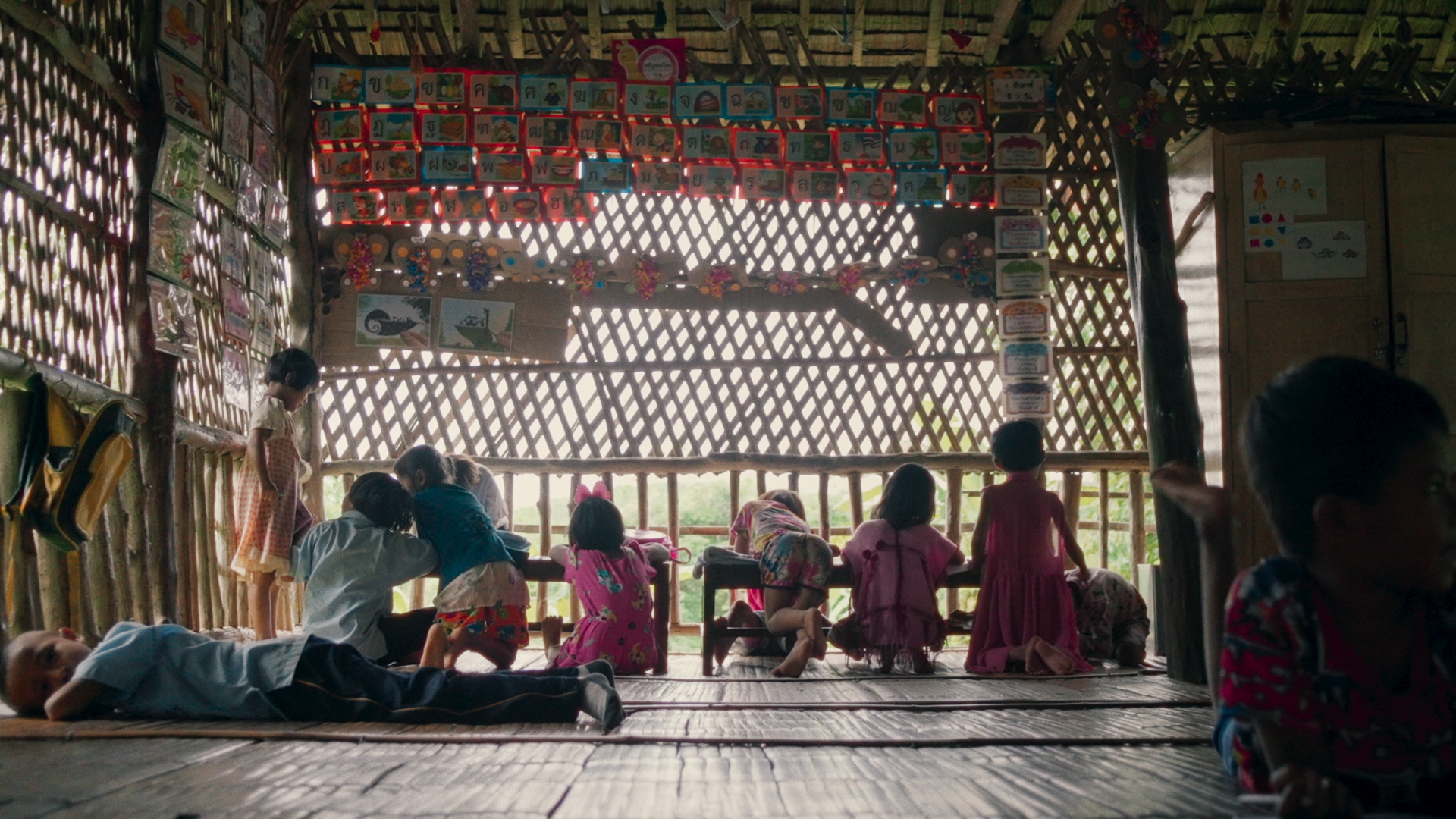
Due to my interest in public health, the EMA team suggested that I support one of our long-standing partners, Children of the Forest (COF). After learning that COF has a multisectoral approach to assisting stateless children, single mothers, and families on the Thai-Myanmar border, I was determined to work with them. As someone who had just left a pre-pharmacy academic path, I craved understanding systemic levels of support for under-resourced communities, rather than individualized care.
In one of our first meetings in August 2023, I was briefed on the need for a new COF website, since their site had been overrun with viruses. I had made small free websites on Wix before, but I did not think I’d be able to create a comprehensive site that could encapsulate everything COF has to offer. But the EMA team trusted me! And I knew this meant I would get the chance to understand COF intimately and better understand how different organizations and institutions address health inequities, so I went for it.
COLLABORATION, CO-CREATION, AND PROJECT MANAGEMENT
Project management was difficult with numerous tasks to track and manydifferent avenues of communication, from Slack to email to WhatsApp to Zoom, not to mention the time difference between California and Thailand. But I naturally began taking over facilitation of our meetings and action items and developed a trusting, reliable relationship with the COF team.
Branding Material for CoF created by Cedrick Gustave
Creating the new website also meant refreshing COF’s branding and messaging, so I also worked alongside EMA’s internal Communications team. Our Director of Communications & Design, Cedrick Gustave, created a new logo and brand deck that gave COF a more modern style (due to Thailand’s regulations on logo changes, COF couldn’t implement the new logo across all areas, but it has been used on new reports and other materials).
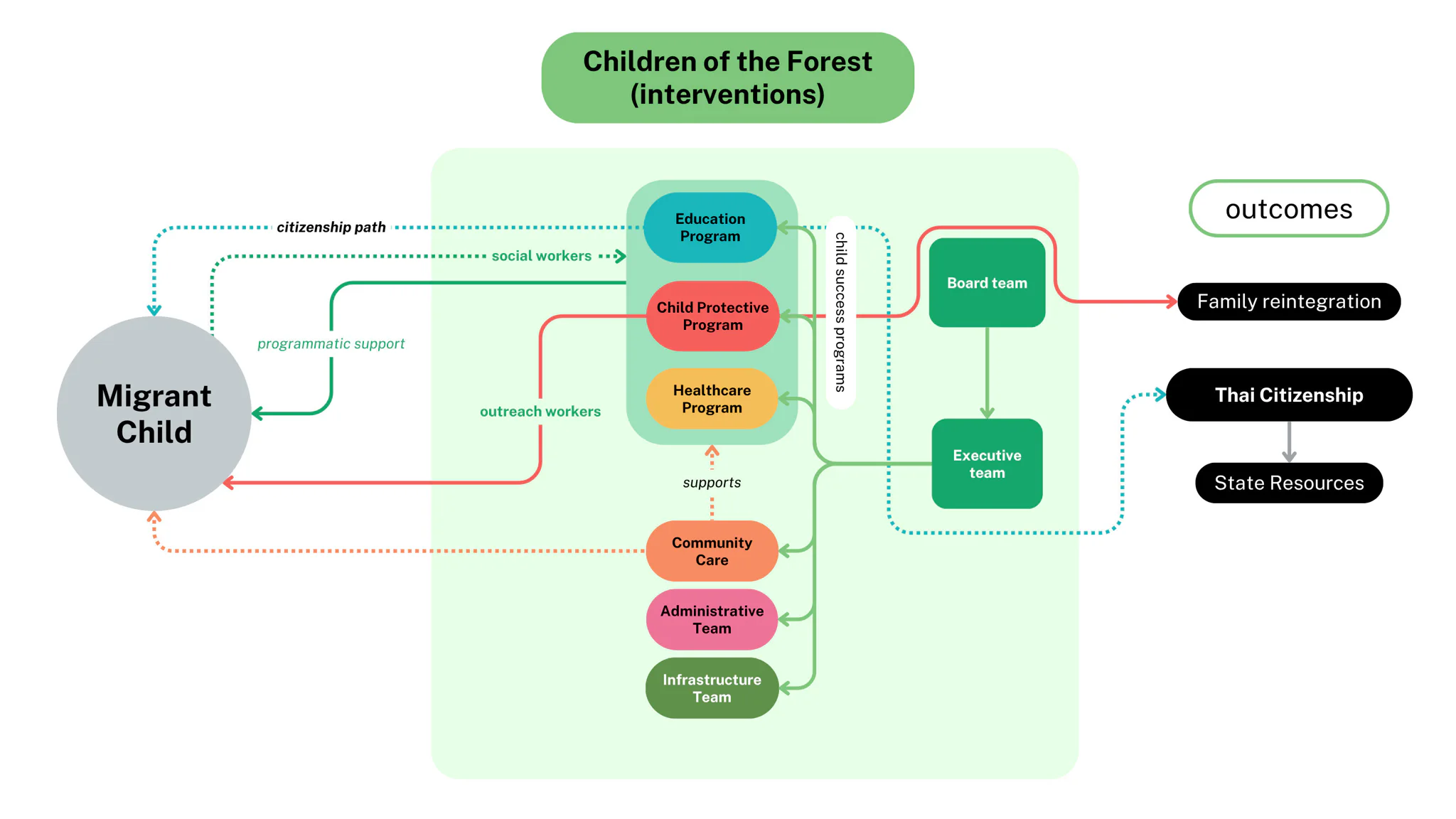
Ced also mapped the organization so that website visitors could more easily understand the geographical scale of COF’s work. Meanwhile, EMA’s Communications Manager, Anna Crawford, supported me in visualizing COF’s Theory of Change and staff structure, turning them into beautiful pieces that accurately represent COF’s workflow and framework.
Chart mapping CoF's work and impact created by Anna Crawford
THE IMPACT FOR CHILDREN OF THE FOREST
This project has supported COF in a number of ways, as noted by COF Project Manager Mark Curragh, who worked in partnership with me from start to finish:
COF has often been told that we have a strong and compelling story, but for a range of practical and capacity-related reasons, we have not always been able to tell that story as clearly or consistently as we would have liked. The development of the new website has already made a significant difference in this regard. Its structure, visual quality, and functionality have greatly improved how we present our work, our values, and our impact to external audiences.
Feedback from supporters and partners has been overwhelmingly positive, particularly in response to the two documentary films featured on the homepage, created by award-winning filmmaker Henry Kinder [and produced by EMA]. These films have helped convey the depth and complexity of our work in a way that written text alone cannot, and they immediately engage visitors with the realities faced by the children and communities we serve.
Internally, the new website and organizational mapping process have been equally valuable. Staff have expressed a renewed sense of pride and motivation, seeing COF positioned clearly within a wider ecosystem of organizations working on similar challenges for vulnerable children. This has helped strengthen internal understanding of roles, relationships, and shared purpose.
From a practical perspective, the modern website setup has enabled us to produce and distribute newsletters more efficiently, maintain regular contact with supporters, and strengthen our fundraising and communications capacity. The additional visual assets and logos designed by Cedrick have also been extremely helpful. While our primary logo must remain unchanged due to Thai registration requirements, these new design elements have allowed us to present a refreshed and professional look across recent reports and communications.
Overall, this collaboration has supported COF not only in telling our story more effectively, but also in strengthening internal clarity, confidence, and connection—laying a stronger foundation for future outreach, partnerships, and sustainability.
THE POWER OF YOUTH AGENCY
As for me, I have learned so much from this experience. My technical tasks on this project involved copywriting, drawing mock-up website wireframes, consolidating reports, creating a report template, developing a theory-of-change model, and reimagining staff structure. Through every step, I met with Mark to ensure that each piece accurately reflected COF’s mission and story. My consistent communication with COF allowed me to effectively align teams and produce a website that exceeded COF’s initial needs. My own expectations of what I could achieve were exceeded, too.
What I’m most proud of is the growth in my ability to co-create with Mark, collaborate with multi-functional teams, and discern how organizations can address health inequities. The process of aligning folks and adapting to COF’s needs was truly gratifying.









.png)